Reviewing the Jumping Horse and Jockey Redwork Design
As a designer who has spent countless hours hooping fabric, testing tension, and critiquing stitch paths, I approach every new machine embroidery design with a mix of curiosity and skepticism. We have all been there: you download a file that looks stunning on the screen, only to find it puckers the fabric or loses its shape once the needle hits the cloth. Recently, I had the chance to evaluate the Jumping Horse and Jockey Redwork design, and I want to share my practical insights for fellow crafters, Etsy sellers, and apparel decorators considering this piece for their next project.
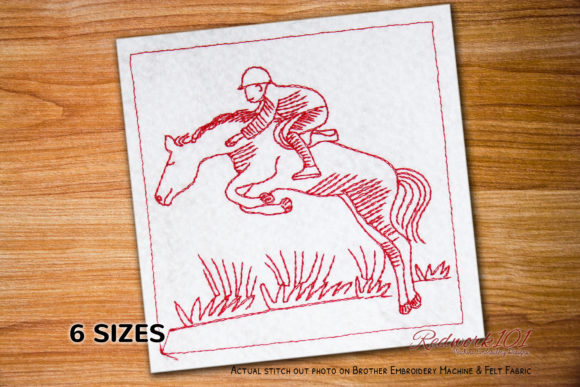
Redwork is a timeless technique, relying on single-color thread—traditionally red, but increasingly versatile—to create bold, graphic outlines. This specific design captures the dynamic energy of equestrian sports, featuring a horse mid-jump with a jockey in position. The first impression is one of movement and classic charm. It does not rely on dense fill stitches or complex shading, which makes it an excellent candidate for beginners and professionals alike who value speed and clean aesthetics.
First Impressions and Visual Appeal
The layout of the Jumping Horse and Jockey Redwork is balanced. The silhouette of the horse is distinct, avoiding the muddy look that can happen when too many running stitches overlap in small areas. For a design categorized under Sports and Embroidery, it strikes a nice balance between athletic energy and decorative elegance. It feels less like a logo for a competitive team and more like a heritage emblem you might find on a vintage riding club blazer or a countryside cottage decor item.
One detail noted in the product description is that the box stitch shown in promotional pictures is optional. This is a crucial feature for us designers. It means the core artwork—the horse and jockey—is standalone. The outer box, often used for framing in samplers or patches, can be skipped if you are integrating the motif into a larger composition or if you are working with a smaller hoop size. This flexibility increases the design’s utility significantly.
Real-World Application: A Case Study
To truly test a design, you must imagine it on a finished product. I visualized this motif on a natural linen tote bag. Linen is a popular choice for handmade products because it holds stitches well and offers a rustic, high-end feel. Using a deep crimson or burgundy thread against the beige fabric would create a striking contrast. The running stitch nature of redwork ensures the bag remains flexible and soft, unlike heavy satin stitch designs that can make fabric stiff and uncomfortable to carry.
Another strong contender for this design is a child’s sweatshirt. Parents love personalized items, and a sweatshirt embroidery featuring a jumping horse appeals to young equestrians. Because redwork is generally less dense than fill-heavy designs, it breathes better and is more comfortable against the skin. However, when applying it to knit fabrics like sweatshirts, the choice of stabilizer becomes critical. I would recommend a cut-away stabilizer to prevent the garment from distorting over time, especially since the horse’s legs and the jockey’s posture involve some diagonal lines that can pull on stretchy fabric.
Performance on Different Materials
Versatility is key for any digital embroidery file intended for commercial use. Here is how I anticipate the Jumping Horse and Jockey Redwork performing across various mediums:
- Caps and Hats: Curved surfaces are tricky. If you plan to use this on a cap, ensure the design is scaled appropriately. The jockey’s details must remain clear without becoming a tangled mess of thread. A structured cap with firm front panels works best.
- Tea Towels and Kitchen Linens: This is perhaps the most traditional use for redwork. The design would look exquisite on flour sack towels. The open nature of the stitching allows the towel to remain absorbent and easy to iron.
- Embroidered Patches: If you are creating badges for a riding school or a club, this design works well on twill. You might need to add a merrowed edge or a satin stitch border around the entire shape to prevent fraying, as redwork alone does not seal the edges of the cut fabric if you are making applique-style patches.
- Baby Items: For baby embroidery, simplicity is safety. Avoid long floats on the backside. Since this is a line-art style, check the back of your test stitch-out. If there are long jumps between the horse’s hoof and the ground, consider adding manual tie-offs or using a software tool to minimize travel stitches, ensuring no loose threads pose a choking hazard.
Technical Considerations for Designers
Before you sell this as part of your craft business inventory, there are technical checks you must perform. The product description mentions that the color of the outer box is different in most designs unless it is part of the design itself. This implies that if you choose to include the box, you may need to manage color stops carefully in your machine. If you skip the box, you are left with a single-color run, which is faster and reduces thread changes.
Stitch density is another factor. While redwork is inherently lighter, you must verify that the stitch length is appropriate for your thread weight. If you are using 40wt rayon or polyester, standard lengths usually work fine. If you switch to 60wt thread for a finer look, you may need to adjust the density or scale the design up slightly to prevent the stitches from looking too sparse.
Always test the design on scrap fabric first. Do not assume it will look the same on denim as it does on cotton. Check the thread colors against your fabric background. High contrast is essential for redwork to pop. A dark red on navy blue might get lost, whereas a bright red on white cotton sings. Also, inspect small details. Are the jockey’s reins clear? Do the horse’s ears define properly? If these elements merge, you may need to resize the design or simplify the stitch path in your editing software.
Commercial Viability and Branding
For small shop products and Etsy listings, presentation is everything. This design lends itself well to printable mockups because its clean lines translate clearly in digital previews. When listing this as a personalized gift option, consider offering it as part of a set. For example, pair the jumping horse with a monogram font that complements the classic style. This adds value to your design assets and encourages higher cart values.
Customer trust is built on consistency. If you are using this for commercial embroidery projects, ensure that every stitch-out meets your quality standards. Redwork leaves little room for error; every misaligned stitch is visible because there is no dense fill to hide imperfections. This demands precision in hooping and stabilization. However, when done correctly, the result exudes professionalism and artisanal quality, which buyers appreciate and are willing to pay for.
Final Verdict
The Jumping Horse and Jockey Redwork is a solid addition to any designer’s library. It is versatile, timeless, and relatively forgiving regarding stitch complexity. It fits naturally into niches ranging from equestrian apparel to home decor. Just remember to respect the nuances of the fabric you are working with, choose your stabilizer wisely, and always do a test run. By paying attention to these details, you can transform a simple embroidery file into a standout finished product that delights customers and enhances your brand’s reputation.
Whether you are creating a holiday embroidery gift for a riding enthusiast or stocking your online store with unique tote bag designs, this motif offers the classic appeal needed to capture attention. Keep your tension checked, your needles sharp, and let the simplicity of redwork shine.